
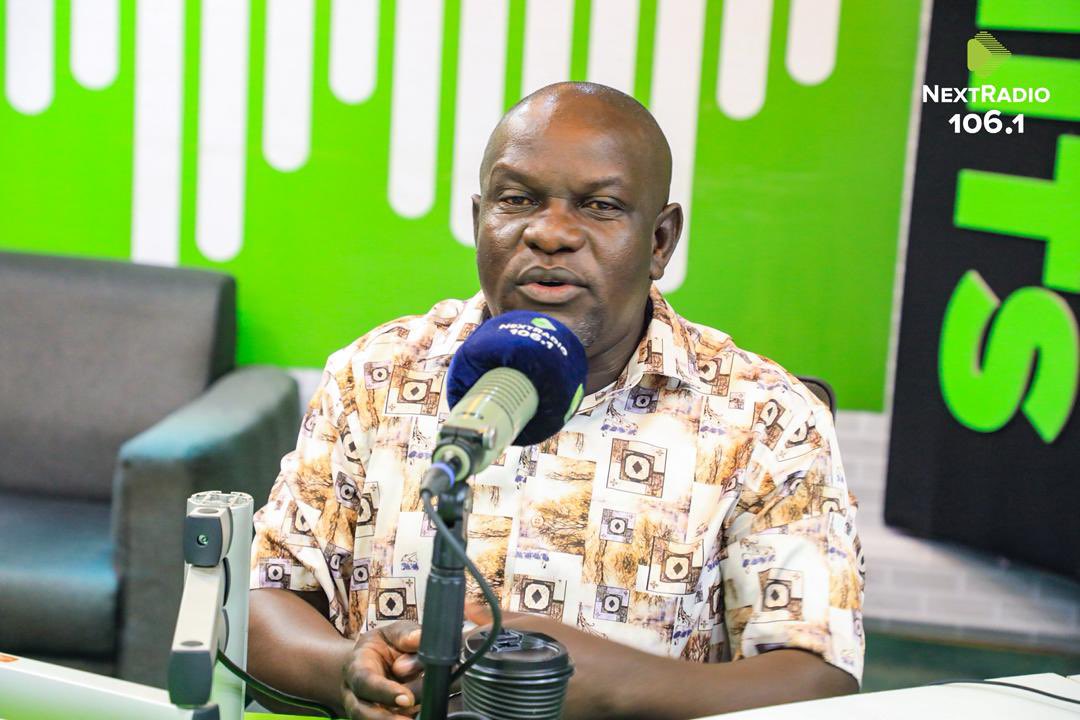
The National Unity Platform’s decision to front Paul Mwiru as its candidate for Speaker of Parliament has stirred more than just a debate about the August House’s leadership—it has quietly reignited questions about the opposition party’s internal bench strength and strategic direction ahead of a highly competitive parliamentary term.
On paper, NUP’s argument is straightforward. Party Secretary General David Lewis Rubongoya says Parliament needs a Speaker insulated from external influence, one capable of restoring institutional independence and strengthening oversight over the Executive.
It is a familiar reformist message, and one that aligns with long-standing opposition concerns about the autonomy of the legislature.
But the choice of Mwiru as the standard bearer inevitably invites scrutiny—not necessarily of his intentions, but of his political trajectory and what it signals about the party’s available options.
Mwiru is not new to Uganda’s opposition politics, but he is also not widely associated with long-standing institutional weight inside Parliament. His political journey has been marked by shifts across formations and electoral cycles.
He first rose to prominence after winning a by-election on the Forum for Democratic Change (FDC) ticket, later aligning with NUP, and subsequently associating with the Alliance for National Transformation (ANT).
In between, he has suffered electoral defeats, including the loss of his Jinja East parliamentary seat, before re-emerging in the political contestation ahead of the 2026 cycle under the NUP umbrella to claim the Jinja South East Division seat.
Supporters argue that such a trajectory reflects political resilience and experience across Uganda’s evolving opposition landscape.
Critics, however, see it as a lack of rootedness in one institutional political base—an important consideration for a role as symbolically weighty as Speaker.
Beyond his electoral history, Mwiru’s public legislative identity is comparatively muted when placed alongside some of NUP’s more established parliamentary figures that the leading opposition party has lost from the 11th Parliament.
Medard Sseggona, Mathias Mpuuga and Yusuf Nsibambi have often been associated with deeper parliamentary experience, procedural fluency, and sustained visibility in House debates and committee work.
Even within the broader opposition ecosystem, Jonathan Odur, Ibrahim Ssemujju Nganda or even Asuman Basalirwa are often referenced as part of the party’s more experienced legislative bloc, while a seasoned figure like Betty Nambooze of Mukono Municipality would still cut it.
In contrast, Mwiru’s public profile is more commonly associated with his legal training and presentation—he is a lawyer by profession—and a polished personal style that has made him visually recognizable in political spaces.
However, beyond these attributes, his legislative footprint is less frequently cited in national parliamentary discourse compared to his more prominent peers.
But NUP would argue that the likes of Ssemujju and Mpuuga have been there, some ran for the position and failed and now Mwiru could be the lucky charm in the house.
Ultimately, this is where the political interpretation becomes more layered. NUP’s endorsement may not necessarily reflect a lack of talent, but rather a strategic calculation: balancing loyalty, availability, internal party dynamics, and perceived electability in a parliamentary contest that is as political as it is procedural.
Still, the optics are difficult to ignore. In choosing Mwiru, the party appears to elevate a figure whose political journey is still being consolidated, at a time when it has several long-serving legislators whose parliamentary reputations are already established.
Even outside NUP, opposition observers sometimes point to legislators like Dr Timothy Batuuwa—whose parliamentary performance in the 11th Parliament has been viewed in different lights—as part of a broader comparison of experience tiers within the opposition space.
The result is a perception problem for NUP: not that Mwiru is incapable of holding office, but that the Speakership bid may be reflecting a narrower pool of consensus candidates than the party would publicly admit.
It also points to a deepening depth issue and suggests the NUP is weakening fast and needs to rebuild. From 56 legislators, the leading opposition party lost about eight seats in January and while that is hardly a number to cause worries, the fact that legislators experience has gone with it is telling.
Ultimately, the Speakership race is unlikely to be decided on opposition endorsements alone. But the choice of candidate does offer a revealing glimpse into how NUP is positioning itself internally—between a rising generation of politically mobile figures and a more established cohort of seasoned legislators whose parliamentary credentials are more deeply rooted.
Whether Mwiru’s candidature is seen as bold renewal or constrained selection will depend largely on how the Speakership contest unfolds—and whether NUP can demonstrate that its choices are driven by strategy, not scarcity.
